
It usually starts with a lease.
A couple from Lisbon rents an apartment in Fortaleza for three months in their first year. The second year it is five months, and a small house near the beach in Taíba. By the third October they are renewing for twelve, the landlord knows them by name, the neighbours keep a spare key, and someone at dinner asks the question that has been sitting in the background all along: what is our status here, exactly?
In our experience, very few people move to Brazil in a single decision. They drift toward it. A winter becomes a season, the season becomes a second home, and at some point the second home is simply home. Furniture gets bought. A dog gets adopted. A child gets enrolled in a bilingual school for a semester that quietly turns into a year.
The immigration side of that story rarely moves at the same pace. Many long stayers are still entering as visitors in their third or fourth year, counting days on a calendar and timing flights around the limit. It works, until it doesn’t: an extension that isn’t granted, a new visa requirement for their nationality, a bank that asks for a residence document they don’t have.
None of this means anyone did something wrong. Visitor status is designed for visits, and nobody tells you the moment your stay stops being one.
This article is about that moment, and about what it takes to turn a long stay into legal residency in Brazil without having to start over halfway through.
The Visitor Clock Runs Faster Than It Feels
Brazilian law gives a visitor up to 90 days per entry, with the possibility of asking the Federal Police for an extension, and an overall ceiling of 180 days in any twelve-month period. The extension has to be requested before the first period ends, and it is a request, not a formality.
For someone who comes for a few weeks of holiday, those numbers are generous. For someone splitting the year between Europe and the Ceará coast, they are tight. The twelve-month window is rolling, so the days you spent last November still count against you next April, and the arithmetic gets harder to keep in your head with every trip.
Since 2025, citizens of the United States, Canada and Australia also need Brazil’s electronic visitor visa before travelling. It controls entry, and it does nothing to lengthen the stay.
The point of mentioning all this is not to make anyone nervous. It is to show why people who spend more than half the year here eventually reach the same conclusion: the visitor framework was never built for the life they are actually living, and a residence permit is the tool that is.
Start With the Category, Not the Paperwork
The most common instinct, once someone decides to regularise, is to start collecting documents. We understand the impulse, since documents feel like progress. But the documents you need depend entirely on the legal basis of your residence, and choosing that basis is the decision that shapes everything after it.
Brazil’s Migration Law (Law No. 13,445/2017) and its regulating decree (Decree No. 9,199/2017) allow residence on a number of grounds, each with its own requirements, initial duration and route to staying long term. For the long stayers we work with, a few come up again and again.
Retirees. Normative Resolution No. 40/2019 of the National Immigration Council (CNIg) allows residence for foreigners with a stable monthly income of at least US$2,000 from abroad. That income does not have to be a pension in the narrow sense. Investment returns, rental income and similar continuing sources can count, which opens the category to many people who stopped working early.
Real estate investors. Normative Resolution No. 36/2018 allows residence for foreigners who buy property in Brazil above a minimum value. The general threshold is R$1,000,000, reduced to R$700,000 for property in the North and Northeast. For anyone who has already bought, or is planning to buy, on the Ceará coast, that regional reduction matters (more on it below).
Family reunion. If you are married to, or in a stable union with, a Brazilian or a foreign resident, or you have Brazilian children, family reunion is often the most direct route, and one of the most stable over time.
Work and business. Employment with a Brazilian company, transfers within a group and some forms of business investment each have their own categories, usually with the employer or the company playing an active role in the application.
Digital nomads. The digital nomad visa (Normative Resolution No. 45/2021) is a temporary residence for people whose income comes from abroad. It suits a certain kind of long stay very well. It does not lead to permanent residence or to Brazilian nationality, so anyone whose real plan is to settle here should choose a different category from the start rather than build years on one that ends.
Two people with identical lives can qualify on completely different grounds, and the better choice often depends on details that look minor at first: whether the income is in your name or a company’s, whether a property is held personally or through a structure, whether a partner is Brazilian, how long you expect to stay. This is the stage where an hour of advice saves the most time later.
From Inside Brazil or From a Consulate
Once the category is clear, the next question is where to apply.
There are broadly two routes. One is to obtain a temporary visa at a Brazilian consulate abroad before travelling, then register with the Federal Police after arriving. The other, available for many categories, is to request a residence authorization from inside Brazil through the Ministry of Justice’s online system, without leaving the country.
For long stayers, the second route is often the more practical one. You file while your stay is still regular, the case is examined by the Ministry of Justice, and the decision is published in the Federal Official Gazette (Diário Oficial da União). In the meantime, you remain in Brazil and life carries on.
It has its own discipline, though. The application has to be filed while you are in regular status, not after the visitor period has run out, and the file has to be complete from the beginning. The authorities may issue a request for additional information or documents (an exigência, in Brazilian practice), and those requests come with a deadline. An unanswered or poorly answered request can lead to the application being dismissed, which usually means starting again from zero.
The consular route can make more sense when someone is still living mainly abroad, when the category requires it, or when timing in Brazil is tight. Neither route is better in the abstract. What matters is which one fits your calendar and your file.
The Document Architecture Few People Are Warned About
This is where most delays happen, and where we spend most of our preparation time with clients. The requirements themselves are not hidden. What tends to catch people out is how the documents relate to one another and the order in which they need to be produced.
Decree No. 9,199/2017 sets the core of what a residence application needs, beyond the documents specific to each category. In practice, a few elements cause most of the trouble.
Proof of parentage. Brazil identifies people by their parents’ names, and the application requires a document showing your filiation, usually a birth certificate. Many passports and national ID cards don’t list parents at all, so this document has to come from the civil registry in your country of birth, and it has to be legalized and translated.
Criminal records. You will need criminal record certificates from the countries where you lived in the past five years, along with a declaration that you have no criminal record anywhere in that period. For someone who has lived in three countries in five years, that means three different authorities, three different issuing processes and three different timelines. Validity windows also matter: a certificate requested too early may no longer be accepted by the time the file is submitted.
Legalization through apostille. Brazil joined the Hague Apostille Convention in 2016, so documents from other member countries no longer need consular legalization. They need an apostille issued by the competent authority in the country where the document was produced. It is simpler than the old system, but it still has to be done in the right country, on the right version of the document, before anything else happens to it.
Sworn translation. Foreign documents generally have to be translated into Portuguese by a Brazilian sworn public translator (tradutor público juramentado). The translation is done on the apostilled document, which fixes the order: issue, then apostille, then translate. Reversing that sequence is one of the most common reasons a file has to be redone.
Consistency. This is the one that surprises people. Names spelled differently across a passport, a birth certificate and a marriage certificate. A maiden name on one document and a married name on another. A date written in a different format. A Brazilian official comparing these documents side by side has to be able to see that they refer to the same person, and when the link isn’t obvious, the file stalls.
None of these points is complicated on its own. The difficulty is that they interact, they involve institutions in several countries, and the clock is running while they are produced. A good file is built backwards from the filing date, with each document requested early enough to arrive valid, apostilled and translated by the time it is needed.
After Approval: The Deadlines That Follow
Approval feels like the end of the process, and for most purposes it is the beginning of the comfortable part. There are, however, a few steps that come with their own deadlines.
When a residence authorization is published, the foreign national has 30 days to register with the Federal Police and request the National Migration Registry Card (Carteira de Registro Nacional Migratório, or CRNM). For those who entered Brazil with a temporary visa issued abroad, the registration window is 90 days from arrival. The CRNM is the document that banks, landlords, employers and public offices will ask for from then on.
Around the same time, it makes sense to sort out the practical side of residence: a CPF in good standing (the taxpayer number that unlocks almost everything in Brazil, and which many long stayers already hold; we explain the process in our CPF Fast Track), a local bank account, and PIX.
Then there are the conditions attached to the category itself. An investor generally has to keep the qualifying property. A retiree has to keep the income. Many categories are granted initially for a fixed term and must be renewed, or converted to residence for an indefinite period, before they expire. Each renewal is a new application with its own file. Filing it on time, while the current authorization is still valid, is far easier than explaining a gap afterwards.
Migration Status and Tax Residency Are Separate Questions
One clarification is worth making here, because the two ideas are often confused.
Your migration status determines whether you may live in Brazil. Your tax residency determines where you are taxed. They follow different rules. As a general reference, a foreigner who spends more than 183 days in Brazil within a twelve-month period, or who obtains permanent-type residence, may become a tax resident, with consequences for how worldwide income is treated.
Whether that happens in your case, and what it means for you, depends on your nationality, the source and structure of your income, any treaty between Brazil and your home country, and how your days are distributed across the year. The answer is individual. The point for now is simply that regularising your immigration status and planning your tax position should be done together, not one after the other.
Why the Northeast Changes Some of the Math
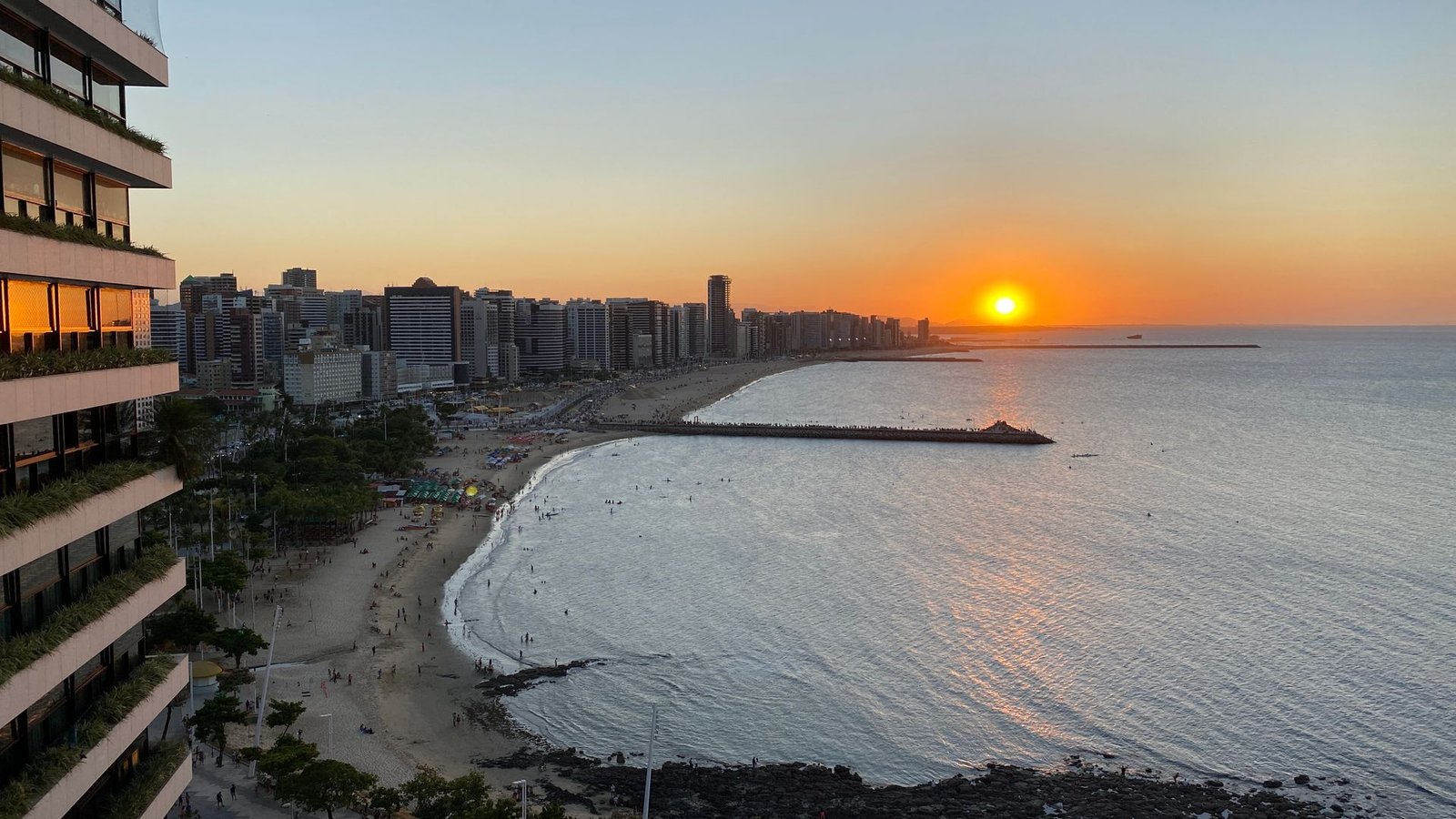
Most writing about Brazilian residency is produced with São Paulo and Rio de Janeiro in mind. Many of the people we work with live somewhere else entirely: Fortaleza, Cumbuco, Taíba, Jericoacoara, the coast between them. A few things work differently here.
The first is the investment threshold. The reduction of the real estate investor minimum to R$700,000 for the North and Northeast means that a property purchase on the Ceará coast can support a residence application at a lower value than the same purchase in the Southeast. For a foreigner who was already planning to buy a house here, the purchase and the residence permit can be designed as a single project, with the deed, the payment trail and the registry documents prepared from the start to serve both.
The second is timing. Demand on the coast rises from the second week of August and stays high until the end of December, and that is also when many long stayers decide they want to come back next year on a different footing. Starting the process in the quieter months gives the documents from abroad time to arrive without competing with the season.
The third is local practice. Appointments, document checks and the rhythm of the Federal Police in Fortaleza have their own logistics, and so do the notaries, the property registries and the sworn translators who will touch your file. Knowing how those offices work in practice makes a real difference to how smoothly a case moves.
We are based in Fortaleza, and this is the part of Brazil our clients spend their time in. That is a large part of why we work the way we do.
What Migravisa Does for Long-Stay Foreigners
- Category strategy, matching your income, family situation, property and plans to the residence basis that fits them best, with a view to where you want to be in five years, not only next season
- Document architecture, planning every certificate, apostille and sworn translation in the right order and with the right timing, across all the countries involved
- Residence applications from inside Brazil, including filing, follow-up and responses to any request from the authorities within the deadline
- Consular visas when applying from abroad is the better route
- Federal Police registration and CRNM, plus renewals and conversion to indefinite residence when the time comes
- Real estate and residency together, so that a purchase in the Northeast can support an investor application from day one
- CPF, banking and PIX, the practical layer that makes daily life work
- Coordination with tax advice, so your migration status and your tax position point in the same direction
We work in English, Portuguese and Spanish.
Most people never decide to move to Brazil. They just keep coming back until they realise they live here.
When that happens, the best time to regularise is before the visitor days run out, not after. Book a consultation with Migravisa and let us map the route from where you are to where you plan to stay.
Migravisa. Global Mindset. Brazilian Soul. Freedom, Simplified.